
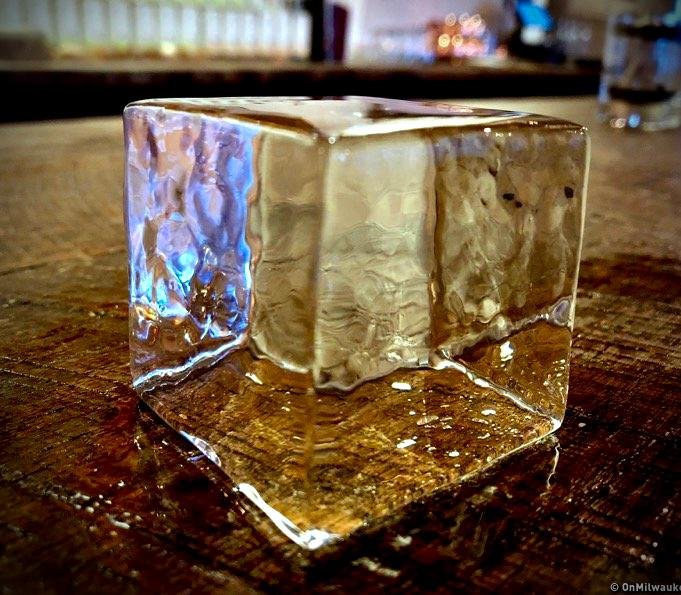
Ice
Cloudy ice is a result of air bubbles getting captured in ice during the freezing process. These air bubbles scatter light in all directions, giving the ice its non-transparent characteristic.
If you have ever observed ice on a freezing pond, you will note the ice freezes from top (in contact with the frigid air) to bottom (insulated by the heat of the earth.) As ice freezes from one direction (like in an insulated ice mold), it pushes the impurities and air bubbles to the unfrozen part, producing a clear part of ice until it reaches the area where the impurities and air are concentrated.
When water freezes slowly, the air dissolved in it has a chance to escape, resulting in clear ice. This is why ice made from boiling water can be clearer than ice made from room-temperature or cold water (though clear ice is primarily a result of a slow-freezing process).
Impurities can also contribute to the cloudiness of ice. If you are freezing your ice cubes slowly, from top to bottom, and are still getting cloudy results, check the level of impurities or minerals present in the water. In these instances, using a distilled or purified water may help you get the clear ice you desire.